I was at the knitting shop a while back to pick up some sock yarns to play with. The Ty-Dy Socks Blueberry Field I found looked just like an indigo vat so I got it despite some reservations. It was amazingly soft and bouncy in the ball, which doesn’t bode well for socks. It also split easily and somehow I managed to twist it even more than I normally do in knitting. But I loved the color so I stuck it out.

The crazy long repeat was a little odd to work with. I started the second sock from the second ball (I bought three) to get the same color sequence, otherwise I would have had to waste a ridiculous amount of yarn to start in the same place. There are only about two and a half repeats in the whole sock.

After the first wearing, the bottoms looked like they had been dragged around the house by a herd of cats. Yes, I do have gauge problems and only the toe was as firmly knitted as I wanted. But even it started to throw off lint immediately.

Click for larger image:

blue and green socks

So now I have a pair of really soft indigo vat colored bed socks, not something I could actually wear with regular shoes. I also have two half balls and one full ball of yarn remaining. With the color repeat, it will take some careful planning to have a smooth transition in a larger piece. I’m wondering if I ply it tighter I can get a usable yarn, but I’d have to find a pattern stitch that can handle the extra twist.

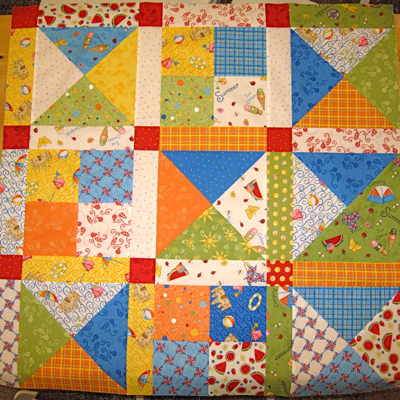
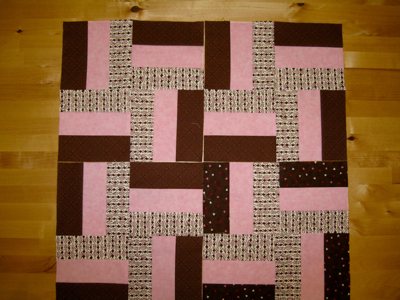
I recently bought some precut strips of quilting fabric to play with, mostly because they looked like a nice selection of designs and it would save time cutting. There are a bunch of different options, I ended up with two matching rolls of 1-1/2 inch strips. I wasn’t quite sure what to do with them so I tried a small project first.

strips of precut quilting fabric in different print designs

I was a little leery of using unwashed fabric so I combined it only with other fabrics I hadn’t gotten around to washing. I picked two designs out of the strips and made a really simple design of rectangles for a laptop sleeve.

blue and green laptop sleeve

Overall, it went ok. The strips have a pinked edge that I had to watch carefully with matching edges and stitching. But the fabric has enough body to stitch nicely. I still have problems maintaining a consistent seam so things didn’t turn out quite as I intended, but I picked the sashing fabric because it was busy and would hide badly matched seams or various other small flaws. Nothing went horribly wrong in washing the quilted fabric so that was nice.

I made a envelope sleeve with a large overlap and no closure, basically something for keeping the laptop from getting scratched. The opening is on the side so I can access the power connector without removing it from my bag. A while back I bought a padded sleeve like this and discovered it’s really handy to keep the machine packed away but still plugged in.

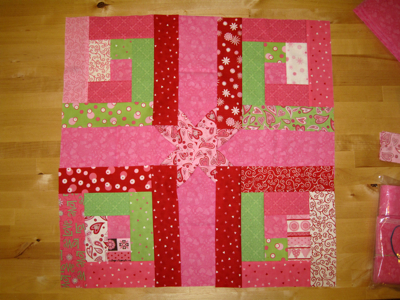
I have many strips left so now I’ve started a larger throw size quilt. It’s intimidating to draw out a design with hundreds of tiny squares but so far it’s been going ok. I divided the fabrics into blue-green and yellow-red piles, setting the ones with a white background aside for another project. I’m doing kindof a 4-patch thing with some larger squares of other fabrics.

I may try some wider strips or squares for a specific project but I think I’m mostly going to stick with regular washed fabrics. I do a lot of regular sewing so I always have scraps to work with. The idea of buying fabric to cut up specifically for quilting still seems a little strange (although I have to say I’ve done quite a lot of it the past couple months. Nothing like a couple discount coupons to motivate.)

I have plans for several larger quilts, although I think I’m going to have them quilted by someone else. Small things are ok but bed quilts are quite a handful to baste and stitch.

Just one picture before I head off to bed:

Maker Faire badge and Editor's Choice ribbon

My demo went really really well!

Yesterday afternoon was setup day. I didn’t have to wrangle the giant knitting needles, but I had my own area to set up. I warped the rigid heddle loom and tried to guess at how I wanted to arrange my display. It will get re-done this morning I’m sure. Here’s a photo of the disarray, including the partly-warped loom:

Maker Faire display setup

The Maker Faire stuff is coming in and this week I got the loom we will be using. It’s an Ashford Knitters Loom, a small folding rigid heddle loom.

It took about 10 minutes to get it out of the box and put together both the loom and the stand. It’s clearly a beginner’s loom, plastic parts keep both weight and cost down. But it’s nicely finished and quite serviceable for small scarves, bags, table runners and so on. It comes with a 7.5 dent reed and you can get several others.

Included with the loom is a warping peg to measure warp by looping your yarn through the reed, around the peg and then the back beam, with both loom and peg clamped to solid objects. This is a simple variant of and old technique, using a warping drum to maintain tension while winding. After you beam the warp, you pull every other end out of the slots in the reed and put them in the holes (like threading back to front.) I haven’t tried it yet, but it seems simple enough.

My first thought was that I’d replace the plastic holding rods to the beams with cords as I wonder if the cable tie like things snapped into the beam might pop out eventually. I’ve had my warp come undone during weaving and it’s a whole lot of no fun. The other thing is how much warp can you actually get on it, and for anything more than the recommended 2 yards I think I’d prefer the old-fashioned way. Of course, I’m not new to this weaving stuff and someone who is just getting started wouldn’t even know to consider it. Which is just as well.

It is nice that it comes with clamps, as there is no way you will get a good warp on any tiny loom without something holding it down while you beam under tension. The warping instructions tell you to have a friend hold the warp while you beam, although if you look online there are directions for doing it on your own (which is most likely in my opinion.) Fortunately for short warps with typical knitting yarn, tension isn’t a huge deal.

This weekend I’ll try putting on a warp and report back on how that goes.